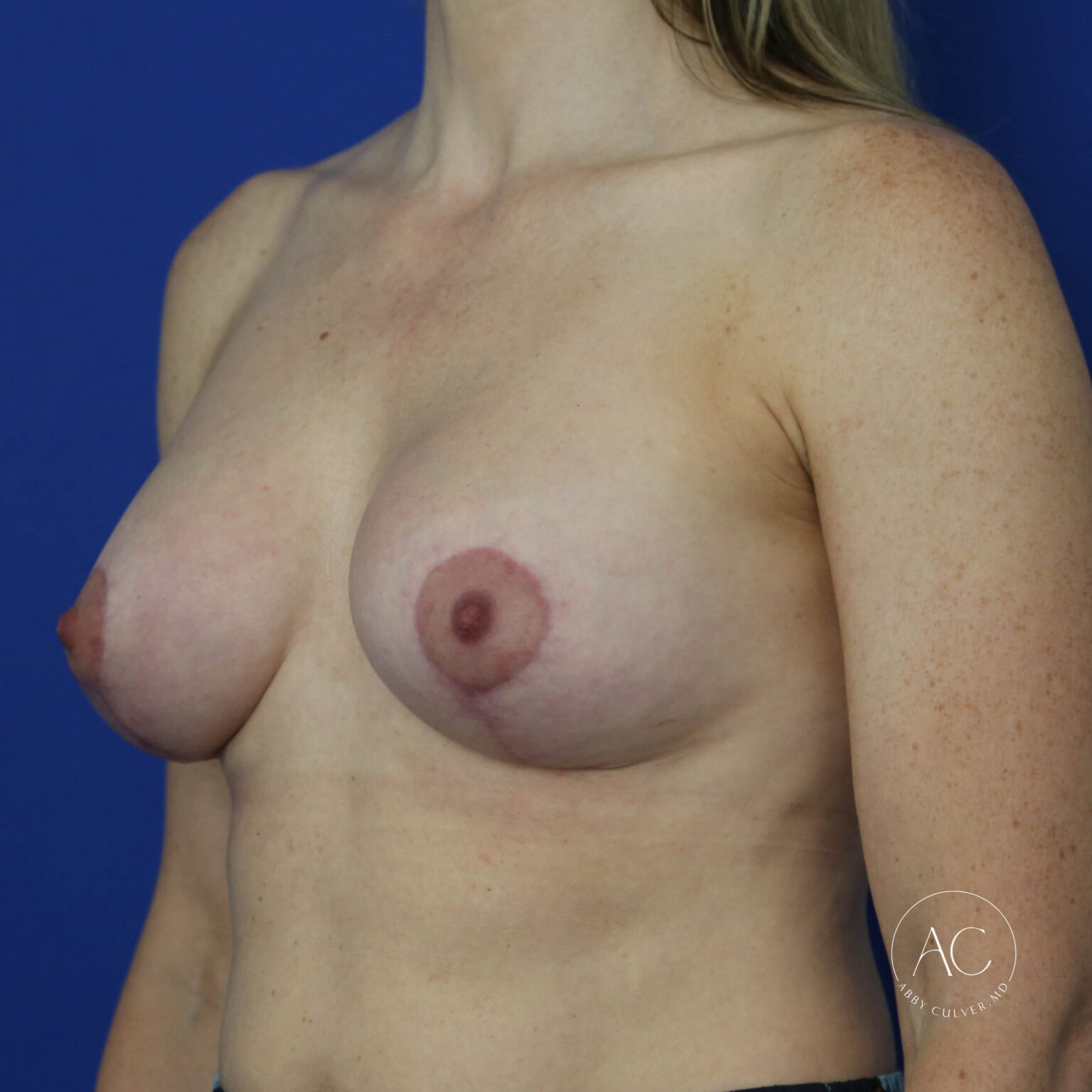
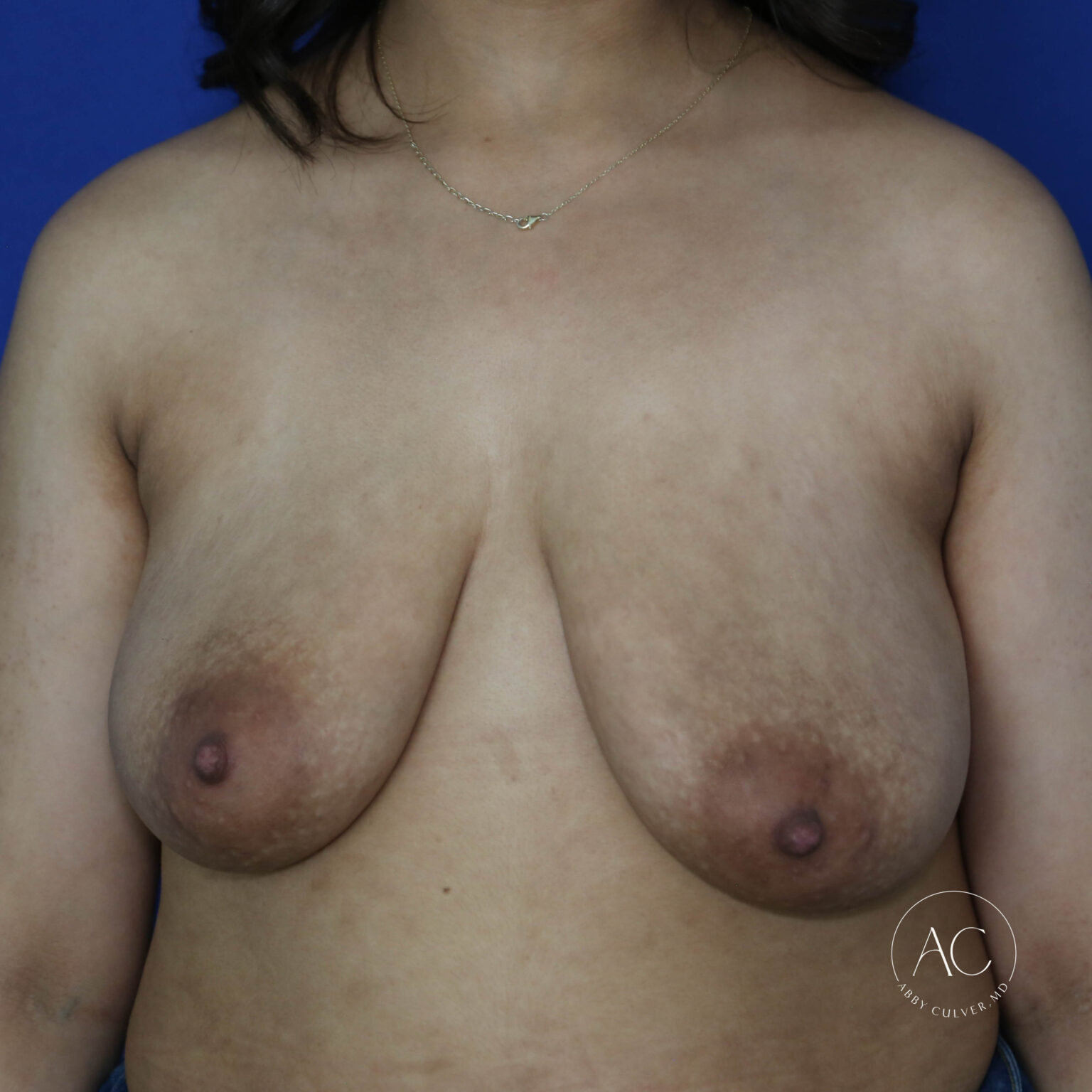
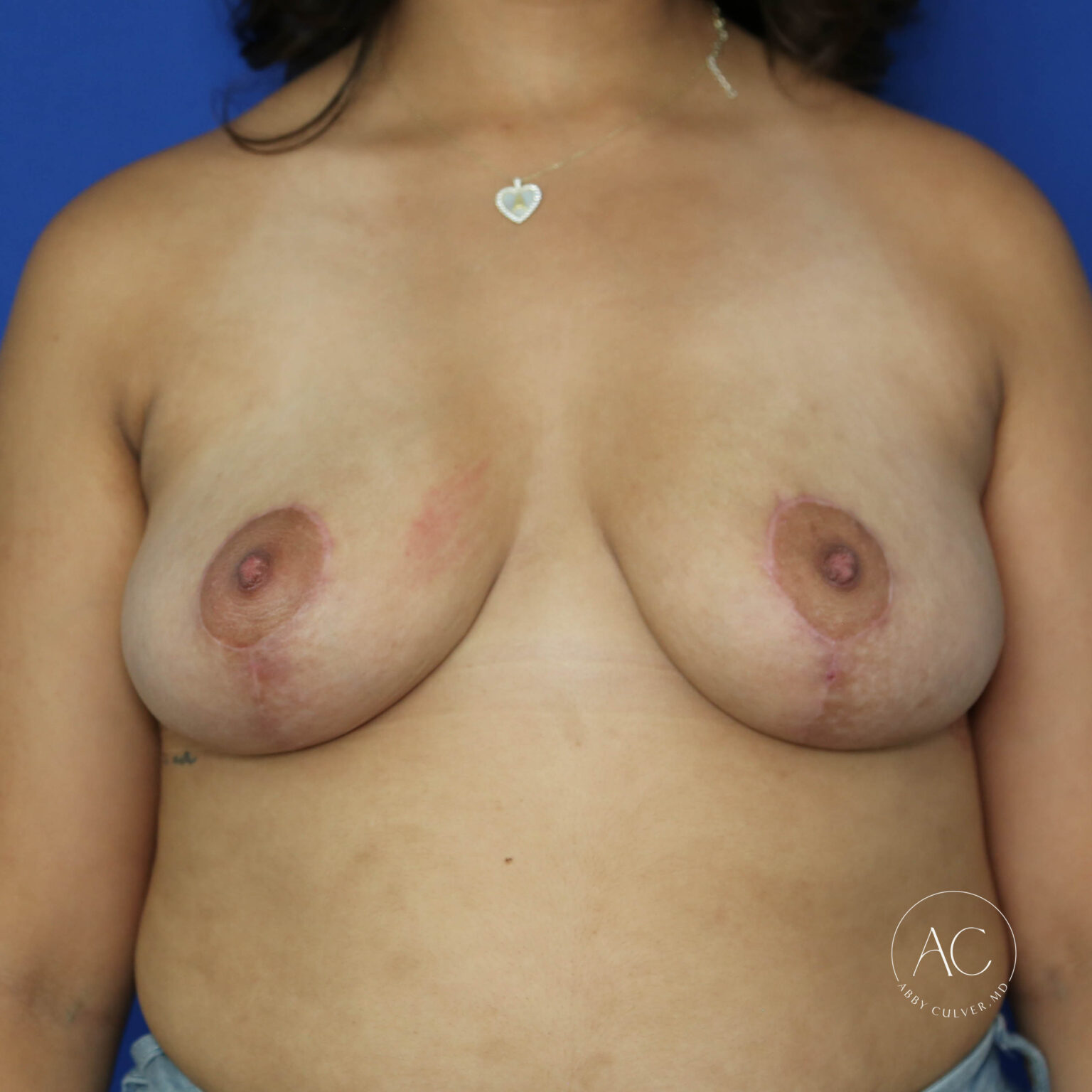
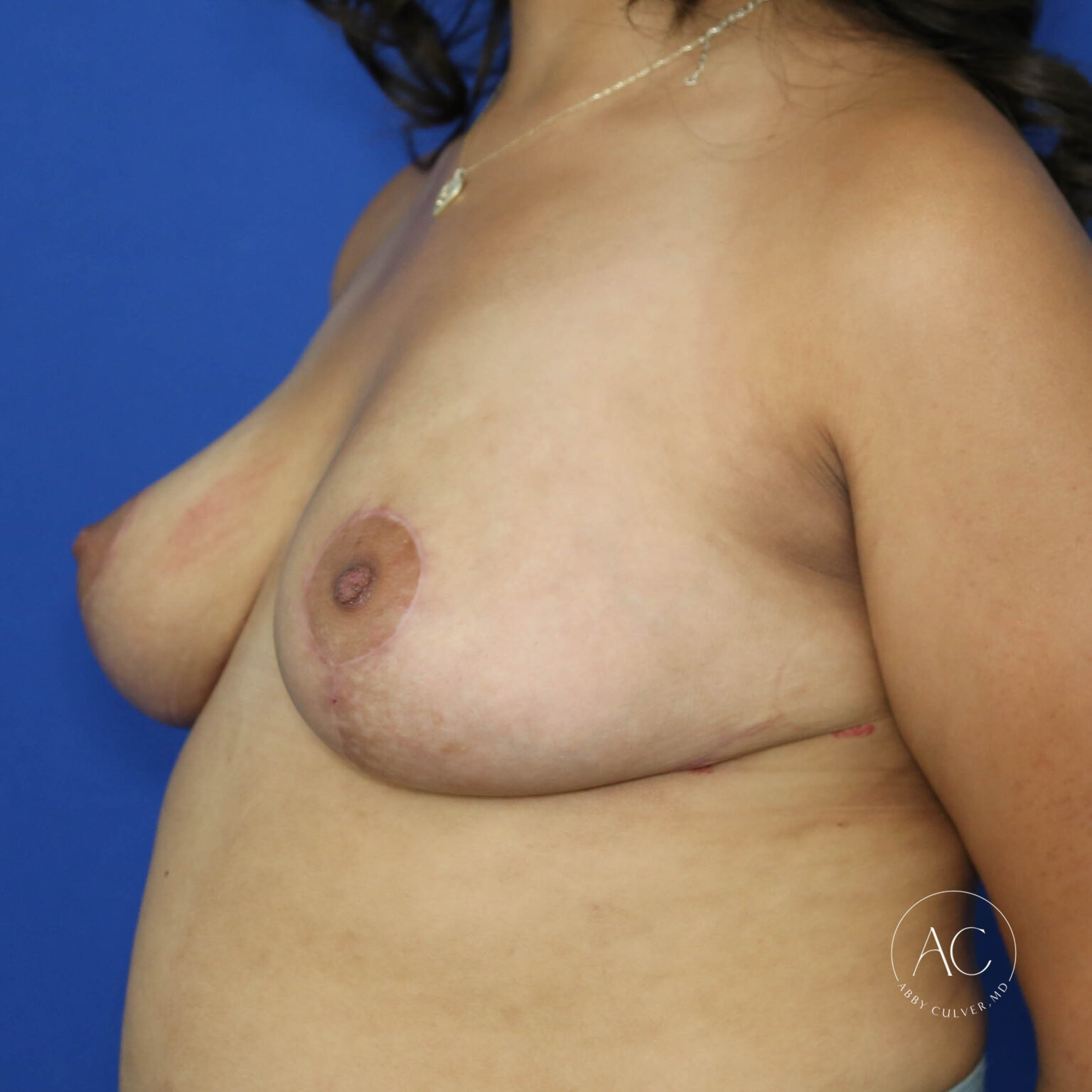
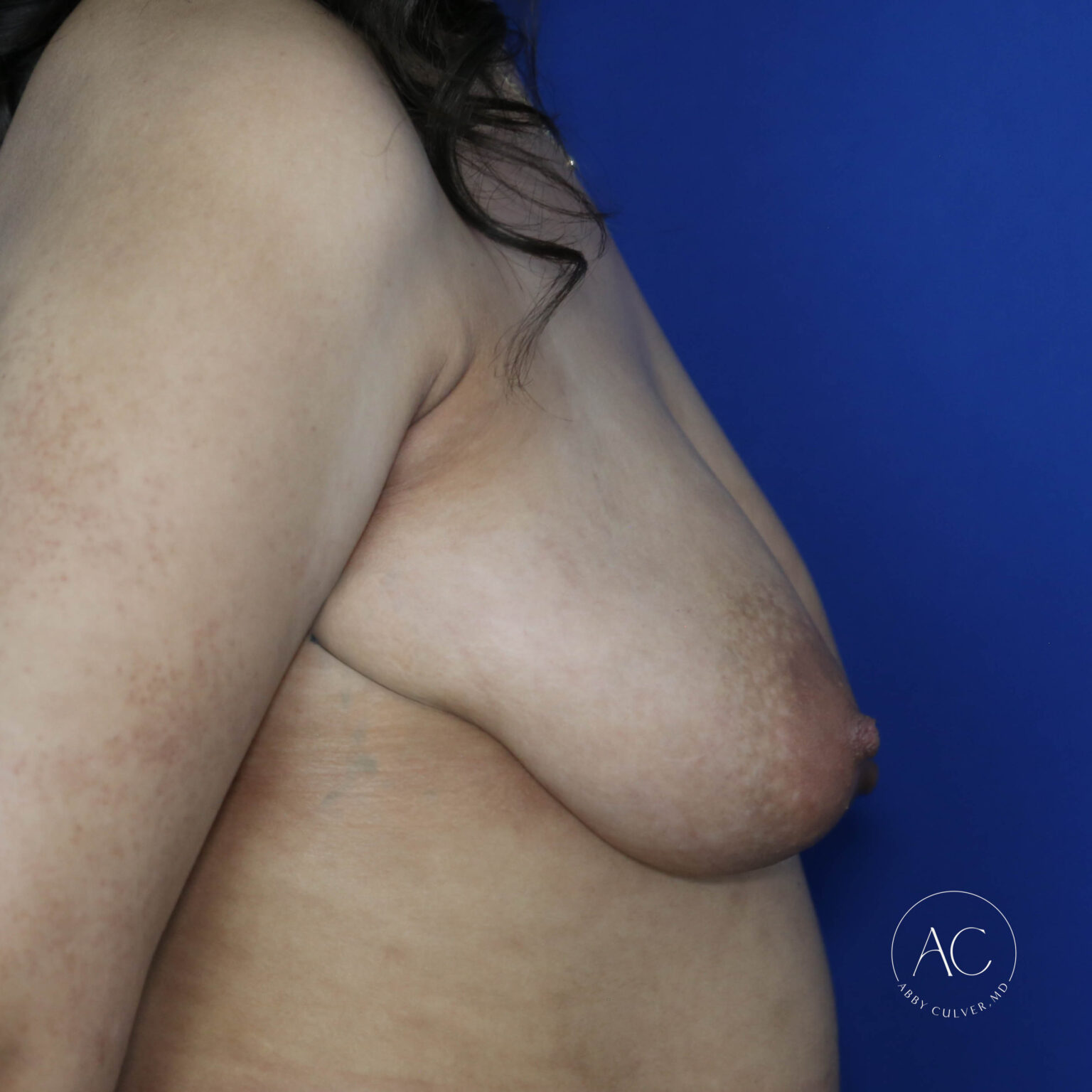
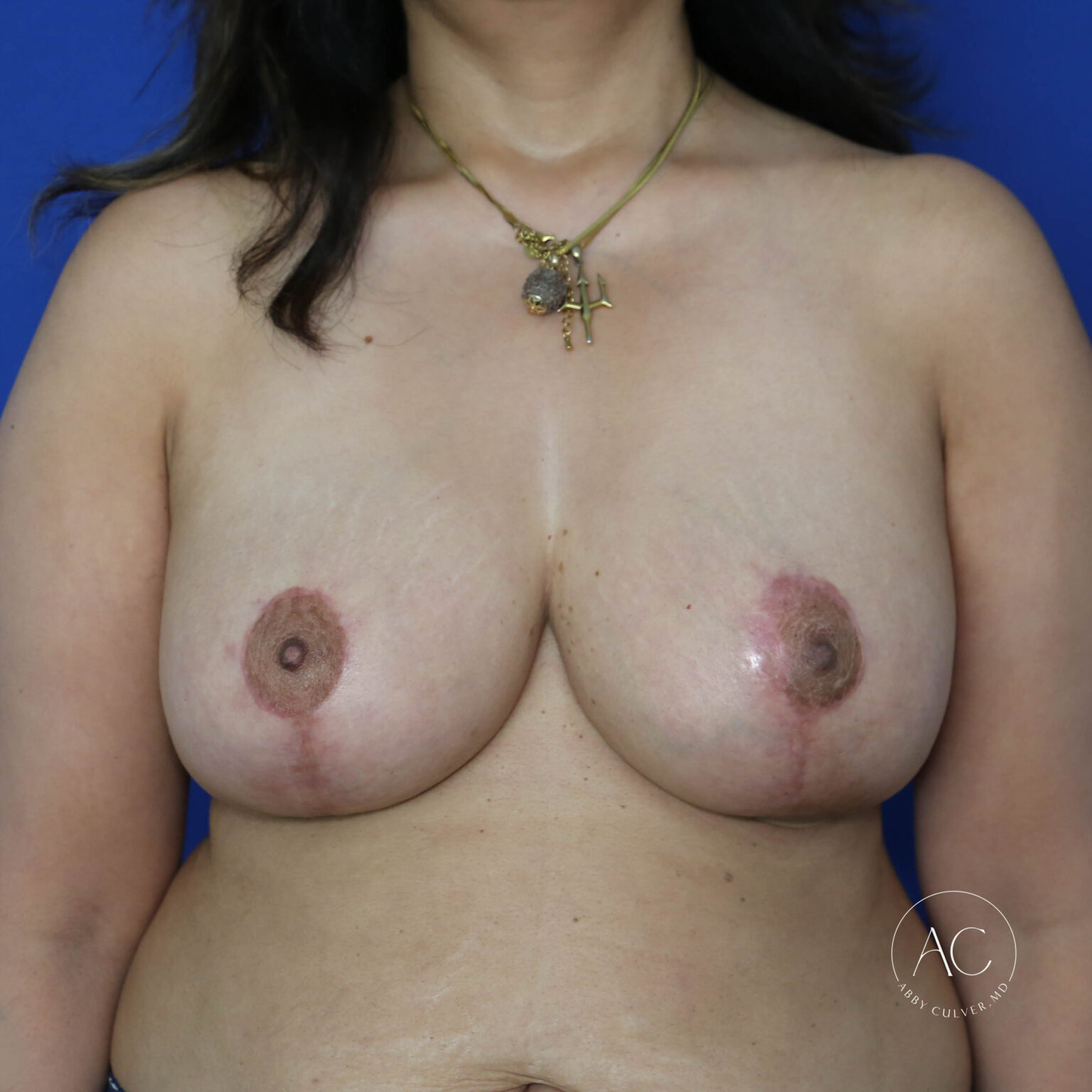
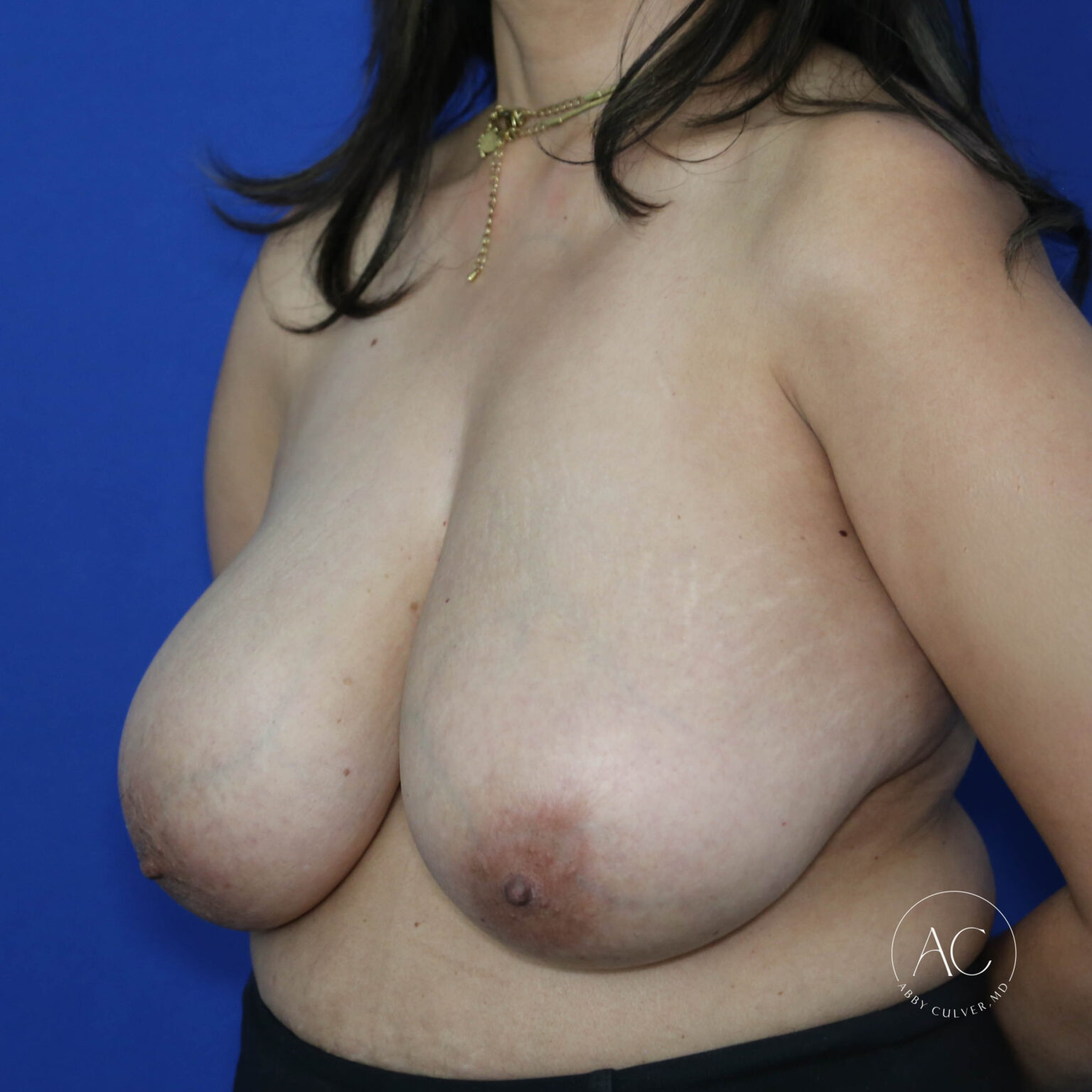
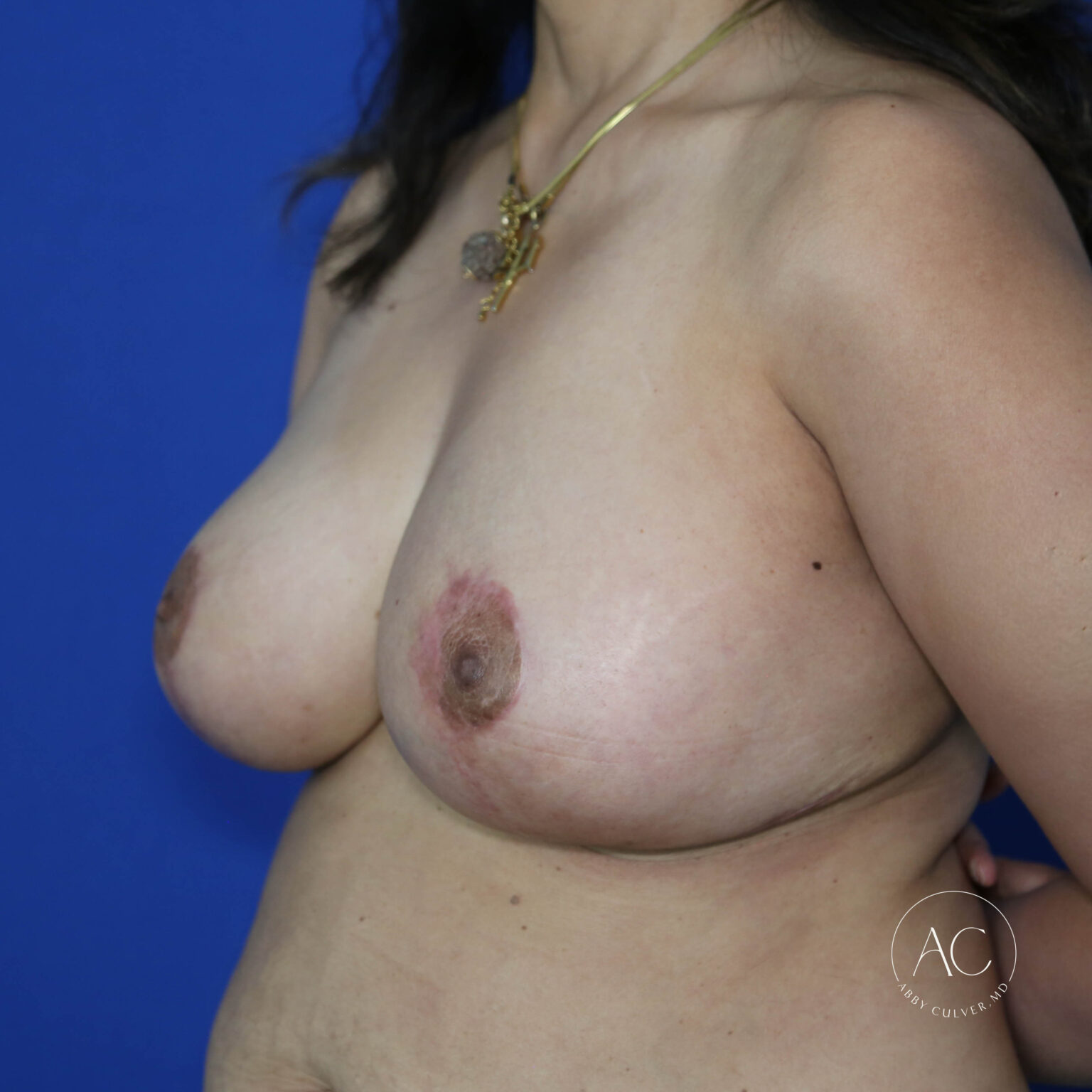
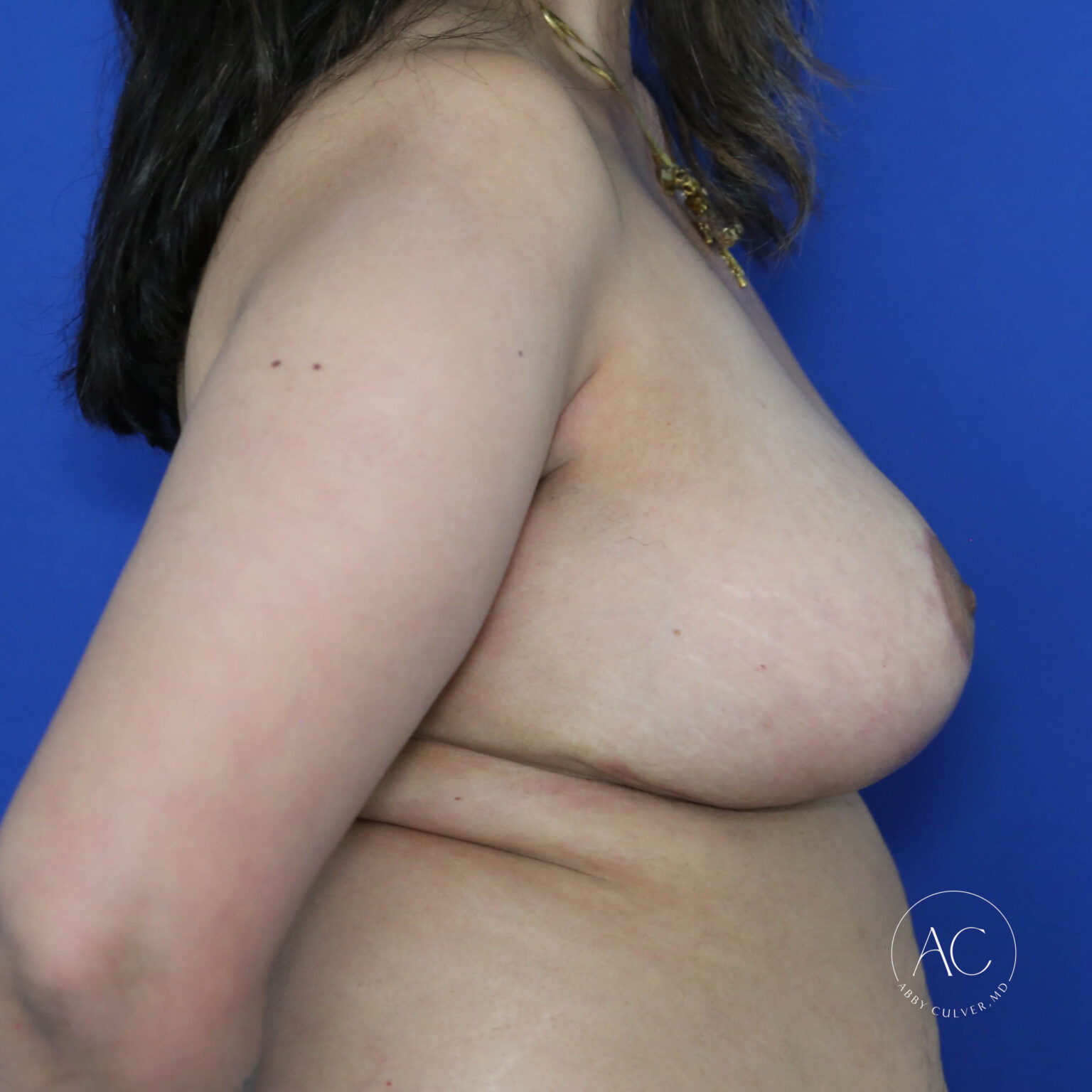
Breast surgery covers the procedures that change breast size, shape, position, or symmetry: adding volume with implants or transferred fat, lifting tissue that has descended, reducing breasts that cause physical discomfort, or correcting an earlier result. Dr. Abby Culver is a board-certified plastic surgeon in Dallas, board certified by the American Board of Plastic Surgery, who completed a six-year integrated plastic surgery residency at UT Southwestern. Each surgical plan is built around individual anatomy, and results vary between patients.


Discover expert nipple reduction surgery in Dallas with Dr. Abby Culver, who specializes in precise nipple surgery reduction for a more balanced appearance. Learn more about nipple reduction and schedule your consultation today for personalized care in Dallas.
Restore youthful shape, enhance volume, and achieve balanced contours with a breast lift combined with implants—designed to address sagging and deflation in one comprehensive procedure that complements your natural curves and body goals.
Performed with local anesthesia rather than general, it lets you stay relaxed and breathing on your own while Dr. Abby Culver enhances your breasts with the same precision used in traditional surgery. It is a gentler experience for the right candidate.
Designed by Motiva to preserve natural breast tissue, sensation, and anatomical support structures, the Preservé system pairs FDA-approved Motiva implants with specialized instruments that support a refined surgical experience.
Most patients arrive weighing size first. Breast augmentation uses implants, transferred fat, or a combination, with placement above or below the chest muscle selected to suit your tissue. If the goal is a modest increase rather than a noticeable one, small breast augmentation works with smaller implants sized to a petite or athletic frame. The Ballerina breast augmentation shares that proportionate aim, using smaller implants or fat transfer to keep the result in scale with a lean build.
The next three pages describe how an augmentation is performed rather than a different result.
Awake breast augmentation places implants under local anesthetic, with light sedation offered to some patients, using the same surgical technique a traditional augmentation requires.
A minimally invasive approach favors careful pocket creation over aggressive dissection and can mean placement above or partially over the muscle.
Preservé by Motiva develops the implant pocket with a channel separator and an inflatable balloon, and suits patients with enough natural tissue for above-muscle placement.
Where breasts have descended, volume is not always the issue. A breast lift removes excess skin, reshapes tissue, and repositions the nipple-areolar complex without adding size. A breast lift with implants does that same lifting work and adds an implant to restore upper pole fullness. That is the dividing line: the combined operation when sagging arrived alongside volume loss, the lift alone when existing volume is enough.
Breast reduction removes excess tissue and adjusts the breast crease for patients whose breast size causes physical discomfort. Breast revision addresses concerns after a previous augmentation, including capsular contracture, rupture, malposition, and rippling, often through the original incision line. Breast asymmetry correction borrows from augmentation, lift, or reduction depending on each side. Nipple reduction reshapes prominent or wide nipples, and gynecomastia surgery removes excess breast tissue and adjacent fat from the male chest.

Breast procedures are frequently performed together. Lift with implant is a frequent pairing, and breast surgery is also grouped with abdominal or body work as part of a mommy makeover. Combining into one surgical session can reduce overall downtime and the number of separate anesthesia events. It suits some patients and not others, depending on health history, operative time, and the recovery you can plan for. Dr. Culver assesses that individually rather than assuming a combination is right.

Dr. Abby Culver is a board-certified plastic surgeon, board certified by the American Board of Plastic Surgery. As a woman, she is passionate about surgery of the breast and body, and much of her practice sits here. She completed a six-year integrated plastic surgery residency at UT Southwestern and later served on its faculty. She is a member of the American Society of Plastic Surgeons and The Aesthetic Society.


Sagging and volume loss are separate problems. A lift repositions tissue and the nipple-areolar complex; an implant restores upper pole fullness. Patients with both concerns often need the combined operation. Dr. Culver evaluates nipple position and tissue quality at consultation to determine which applies.
No single technique suits everyone. Awake augmentation, minimally invasive approaches, and Preservé by Motiva differ in anesthesia and in how the pocket is created, not in the result they aim for. Anatomy, implant choice, and your own comfort with each option guide the recommendation.
Timelines differ by procedure. Most patients resume light daily activity within one to two weeks. Across breast operations the restriction on strenuous exercise runs from roughly three to six weeks, and the individual pages differ. Dr. Culver sets your specific schedule at follow-up.
Any breast procedure that uses incisions produces some scarring. Incisions are placed as discreetly as possible, often in the breast fold or around the areola, and scar maturation continues for up to a year. How scars settle varies with individual healing.
Pregnancy and breastfeeding can change breast volume and skin quality after surgery, which is why patients who have completed family planning tend to see more stable results. If you are still planning a pregnancy, raise it at consultation before scheduling.